

industry news & smtc updates
Industry News, Training Center Updates, and member spotlights. Explore what it’s like to join, and what we stand for at the Nor Cal SMW Training Center.
Pick A Topic
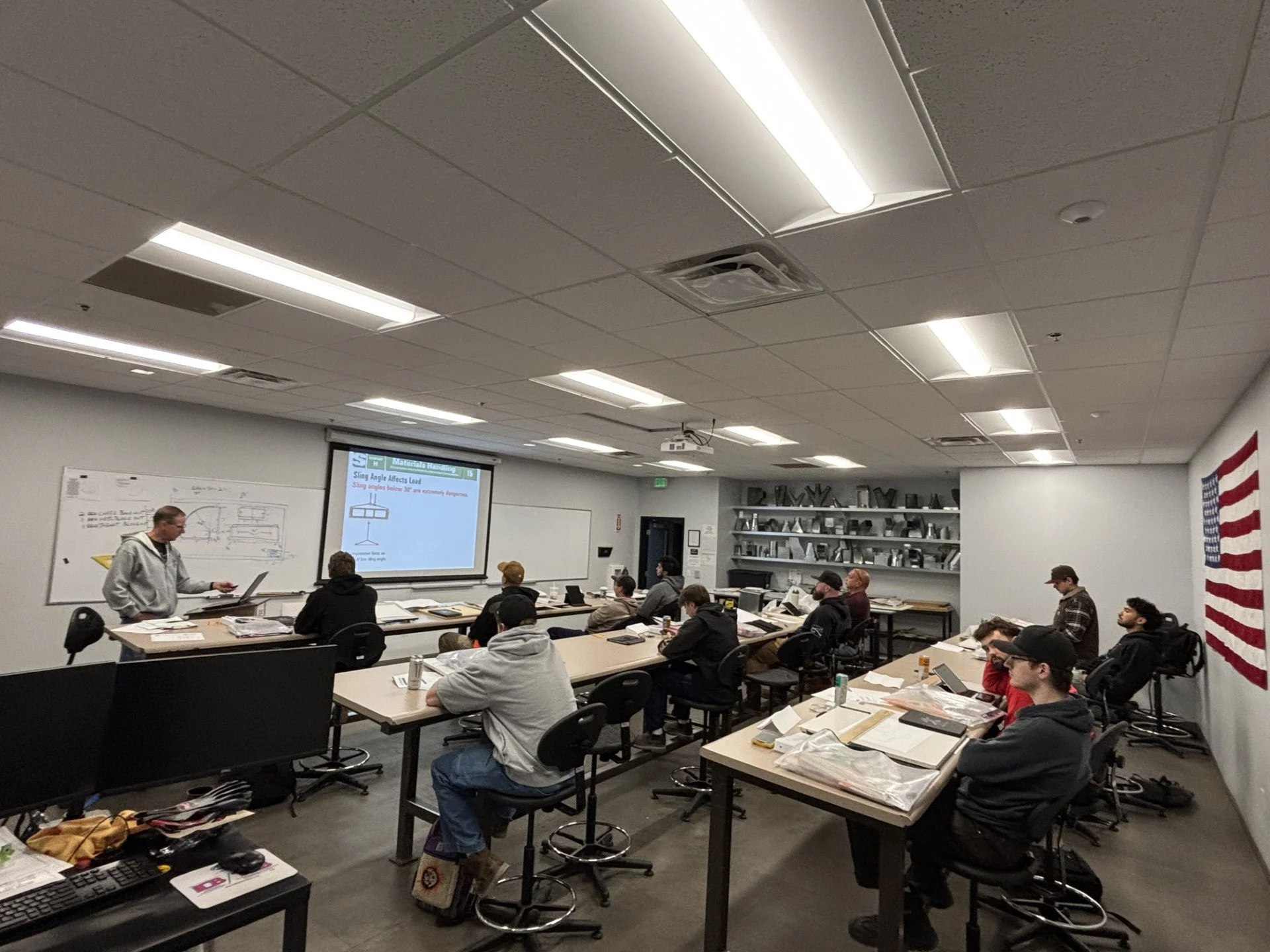
First-year sheet metal apprentices build jobsite safety knowledge through OSHA 30 construction training, strengthening hazard awareness and safe work practices.
Technical skill begins with knowing how to work safely. Our first-year Sheet Metal apprentices are building that foundation through OSHA 30-Hour Construction Outreach Training, developing the hazard awareness needed for demanding construction environments.
For sheet metal professionals, safety connects directly to daily tasks—from fabricating and handling metal to installing ductwork and working around other trades. Recognizing hazards, evaluating working conditions, and understanding protective measures are essential skills that apprentices carry from the training center to the jobsite.
OSHA 30 training strengthens their understanding of construction safety topics such as fall hazards, electrical hazards, struck-by and caught-in/between hazards, personal protective equipment, and health hazards. The goal is to help apprentices recognize potential problems and understand how hazards can be prevented or controlled.
Starting this training in the first year reinforces a clear expectation: safe work practices are part of quality craftsmanship. As apprentices develop their fabrication and installation skills, they also build the judgment and accountability needed to protect themselves and those working alongside them.
Our union sheet metal apprenticeship program combines technical instruction, practical training, and safety education to prepare the next generation of skilled construction professionals.
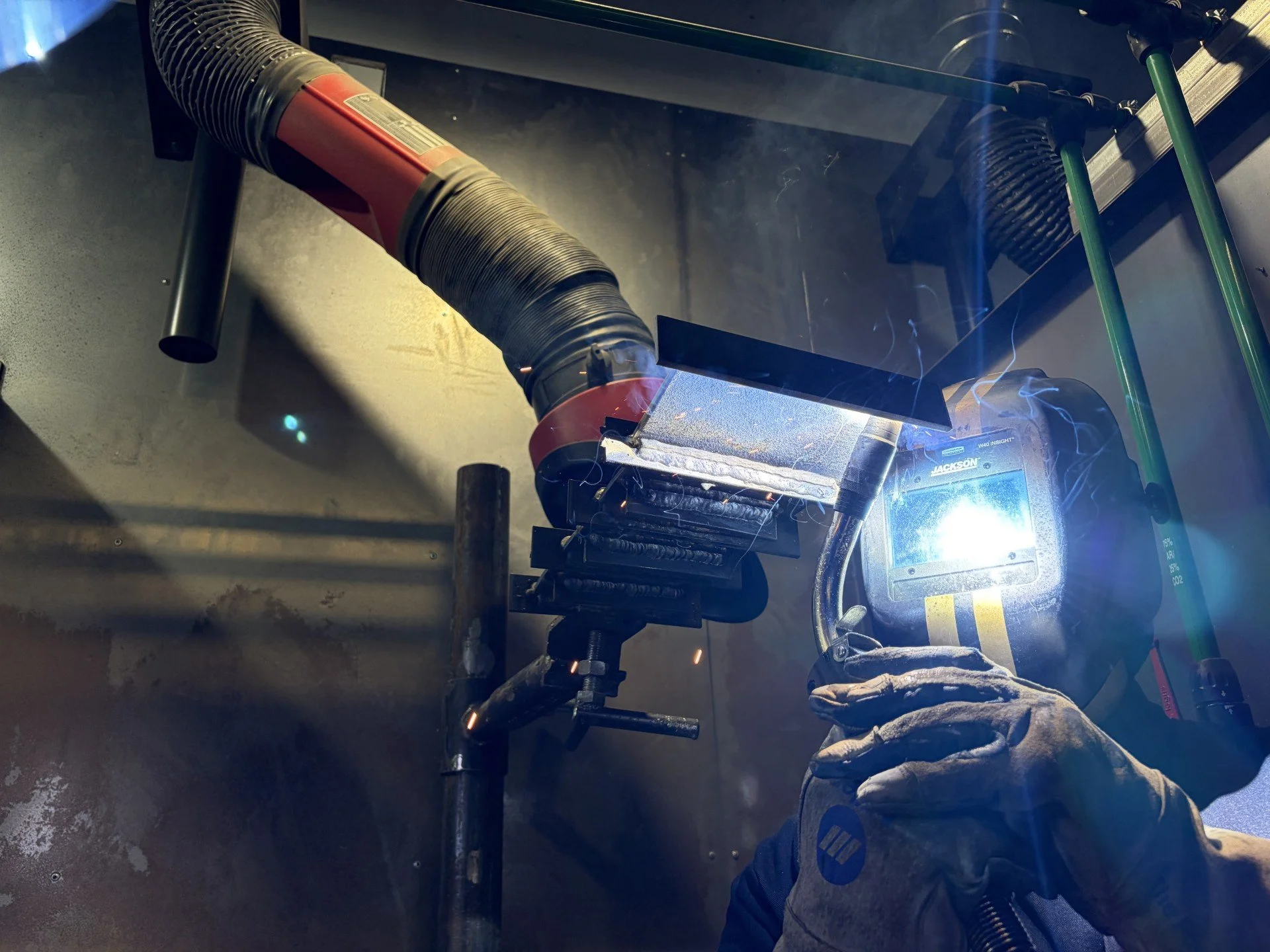
Fourth-Year Sheet Metal Apprentices Build FCAW-G Welding Skills with an I-Beam Project
Our fourth-year sheet metal apprentices are advancing their fabrication skills through an I-beam project using gas-shielded flux-cored arc welding (FCAW-G), commonly known as Dual Shield welding. Welding in the flat, vertical, and overhead positions challenges students to maintain control and consistency across different working conditions.
FCAW-G combines flux-cored wire with an external shielding gas. Throughout this project, apprentices are developing their ability to manage gun angle, travel speed, electrode extension, and weld puddle control—key factors in achieving consistent fusion and weld quality.
Each welding position presents unique demands. Flat-position welding reinforces bead placement and consistency, while vertical and overhead welding require additional attention to heat input and puddle control. Practicing all three positions helps students adapt their technique to the challenges they may encounter in the field.
This hands-on project connects welding theory with practical fabrication experience. Through FCAW-G training, our apprentices are strengthening the technical skills, precision, and confidence needed for demanding work in the sheet metal industry.
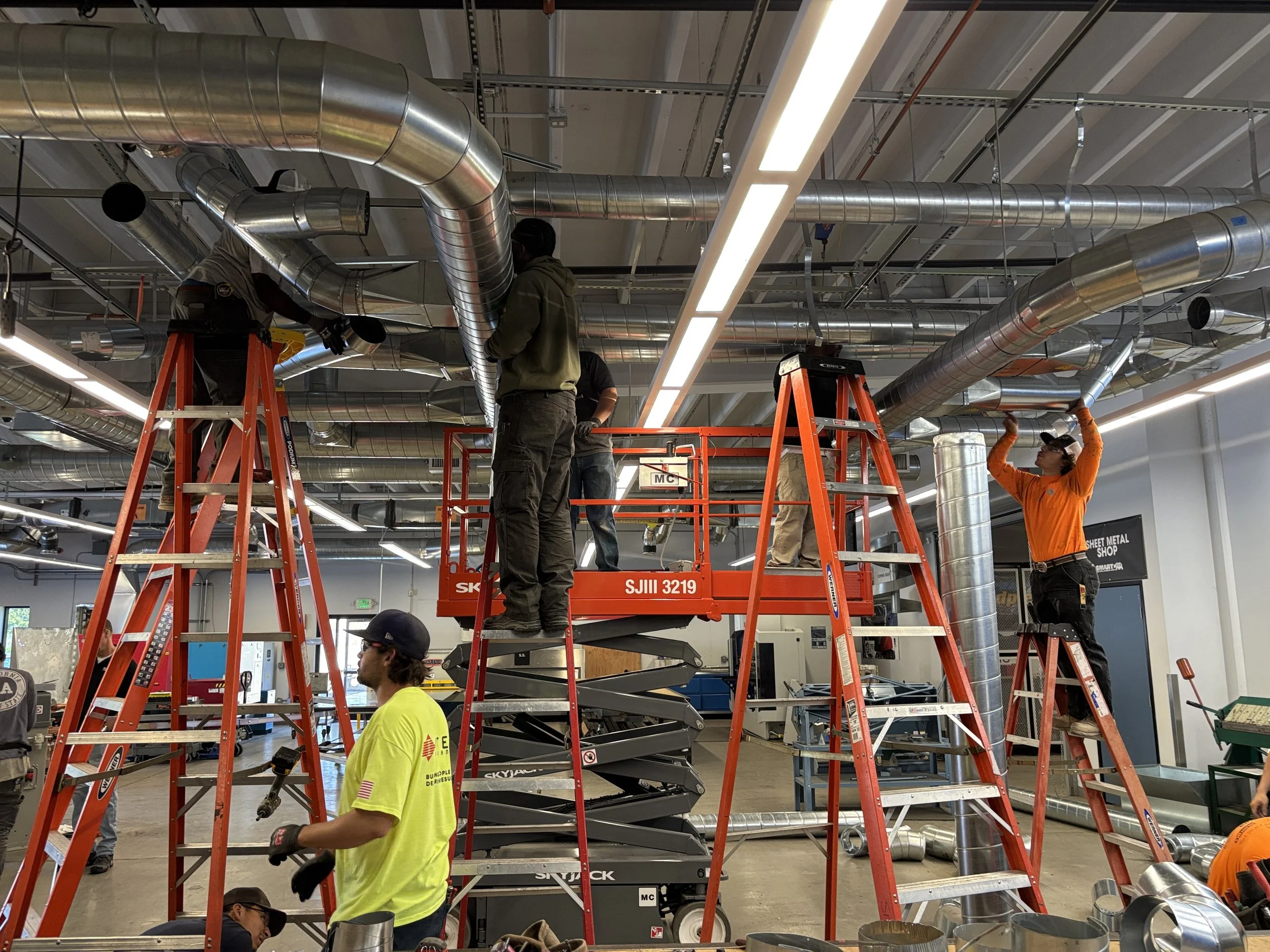
From Drawings to Installation: Third-Year Sheet Metal Apprentices Build Complete Overhead Duct Systems
Our third-year sheet metal apprentices are connecting technical drawings, precision fabrication, and field installation through a comprehensive overhead ductwork project. The assignment takes students through the full construction process—from prefabrication drawings and fitting fabrication to installation, as-built documentation, and a total job cost breakdown.
The work begins with prefabrication drawings, where students translate project requirements into the information needed to build and assemble their duct systems. This stage reinforces dimensional accuracy, fitting layout, and planning before fabrication begins.
Apprentices then fabricate the required fittings and install their overhead systems as though the ductwork will remain exposed. That approach places added emphasis on alignment, fit, consistent workmanship, and the finished appearance of the installation. Each connection contributes to both the function of the system and the quality of the completed project.
Once installation is complete, students prepare as-built drawings to document the final configuration. They also develop a total cost breakdown to evaluate what it takes to complete the job, connecting shop and field decisions to the financial side of construction.
By bringing drafting, fabrication, installation, documentation, and cost analysis into one assignment, this project helps apprentices understand how each phase affects the next. It builds the technical judgment, planning skills, and accountability needed to move a sheet metal project from a drawing to a finished installation.

5th-Year Sheet Metal Apprentices Advance Their Revit Detailing Skills
Our 5th-year Sheet Metal apprentices are putting their building models to work in Module 4 of Intro to Revit 2025. After modeling three buildings in their last class, they are now learning to annotate those models with dimensions and tags.
The class is also exploring the difference between instance and type parameters, when to use temporary and permanent dimensions, and how detail lines support clear drawings. Each lesson builds the precision and communication skills apprentices need to turn a model into useful construction documentation.
A special thank-you to Julie Fifield and Bryan Lyon for creating the outstanding detailing coursework that supports this training!

Building Sacramento’s Next Generation of HVAC Professionals
The 2026 Heavy Metal Summer Experience gave Sacramento-area youth a hands-on introduction to careers in the sheet metal and HVAC industries. Over four days, participants fabricated projects from flat sheet metal, experimented with HVAC service and Testing, Adjusting and Balancing (TAB) equipment, learned welding skills, explored BIM and detailing, and heard directly from apprentices, union representatives and industry professionals.
The program is already demonstrating its value as a workforce pathway, with some participants moving on to employment with local contractors. As the Sacramento region continues advancing building electrification and heat-pump adoption, programs like HMSE can help connect the next generation with the skilled careers needed to install, service, test and verify high-performing HVAC systems.