

industry news & smtc updates
Industry News, Training Center Updates, and member spotlights. Explore what it’s like to join, and what we stand for at the Nor Cal SMW Training Center.

Pick A Topic
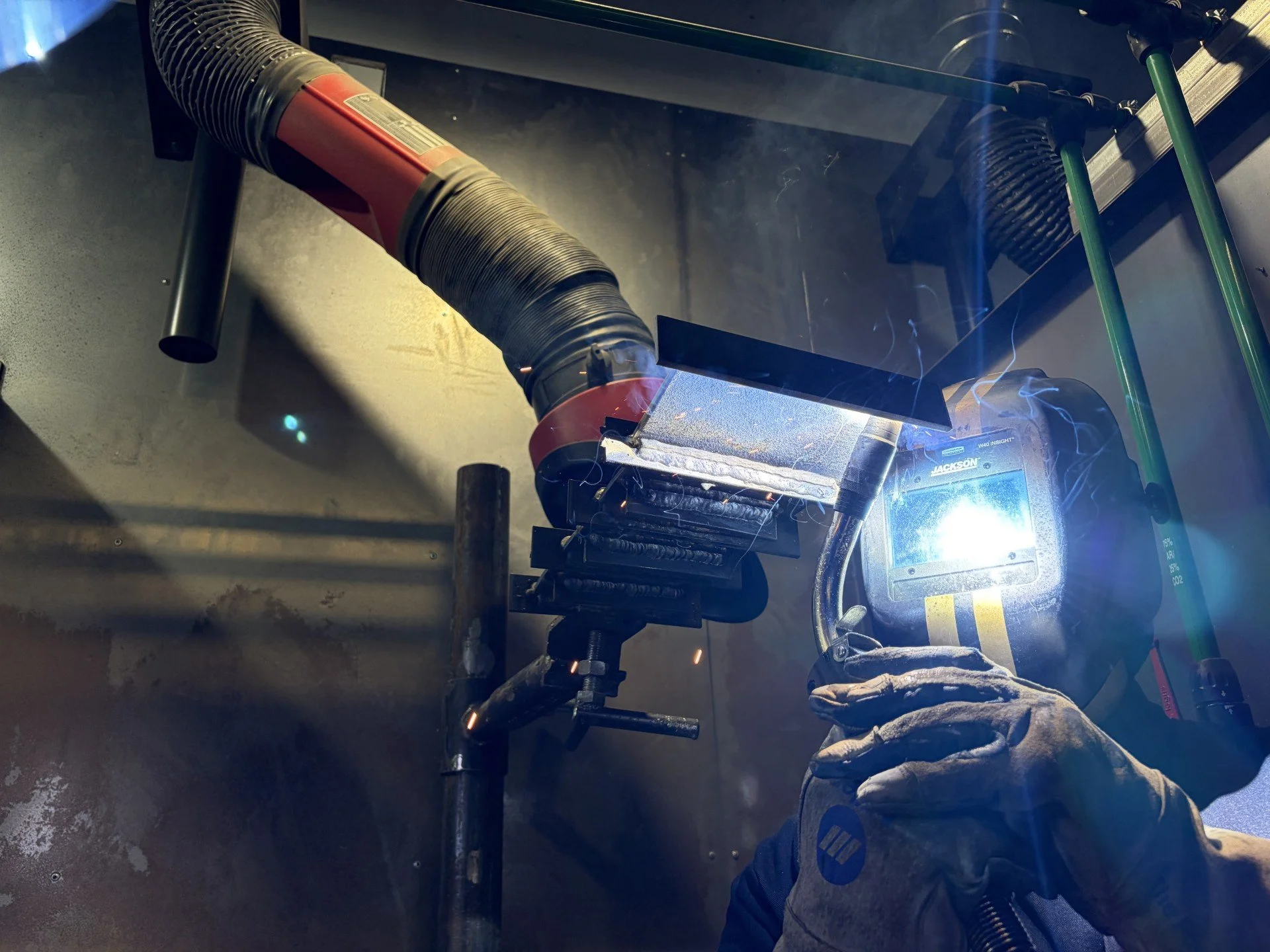
Fourth-Year Sheet Metal Apprentices Build FCAW-G Welding Skills with an I-Beam Project
Our fourth-year sheet metal apprentices are advancing their fabrication skills through an I-beam project using gas-shielded flux-cored arc welding (FCAW-G), commonly known as Dual Shield welding. Welding in the flat, vertical, and overhead positions challenges students to maintain control and consistency across different working conditions.
FCAW-G combines flux-cored wire with an external shielding gas. Throughout this project, apprentices are developing their ability to manage gun angle, travel speed, electrode extension, and weld puddle control—key factors in achieving consistent fusion and weld quality.
Each welding position presents unique demands. Flat-position welding reinforces bead placement and consistency, while vertical and overhead welding require additional attention to heat input and puddle control. Practicing all three positions helps students adapt their technique to the challenges they may encounter in the field.
This hands-on project connects welding theory with practical fabrication experience. Through FCAW-G training, our apprentices are strengthening the technical skills, precision, and confidence needed for demanding work in the sheet metal industry.
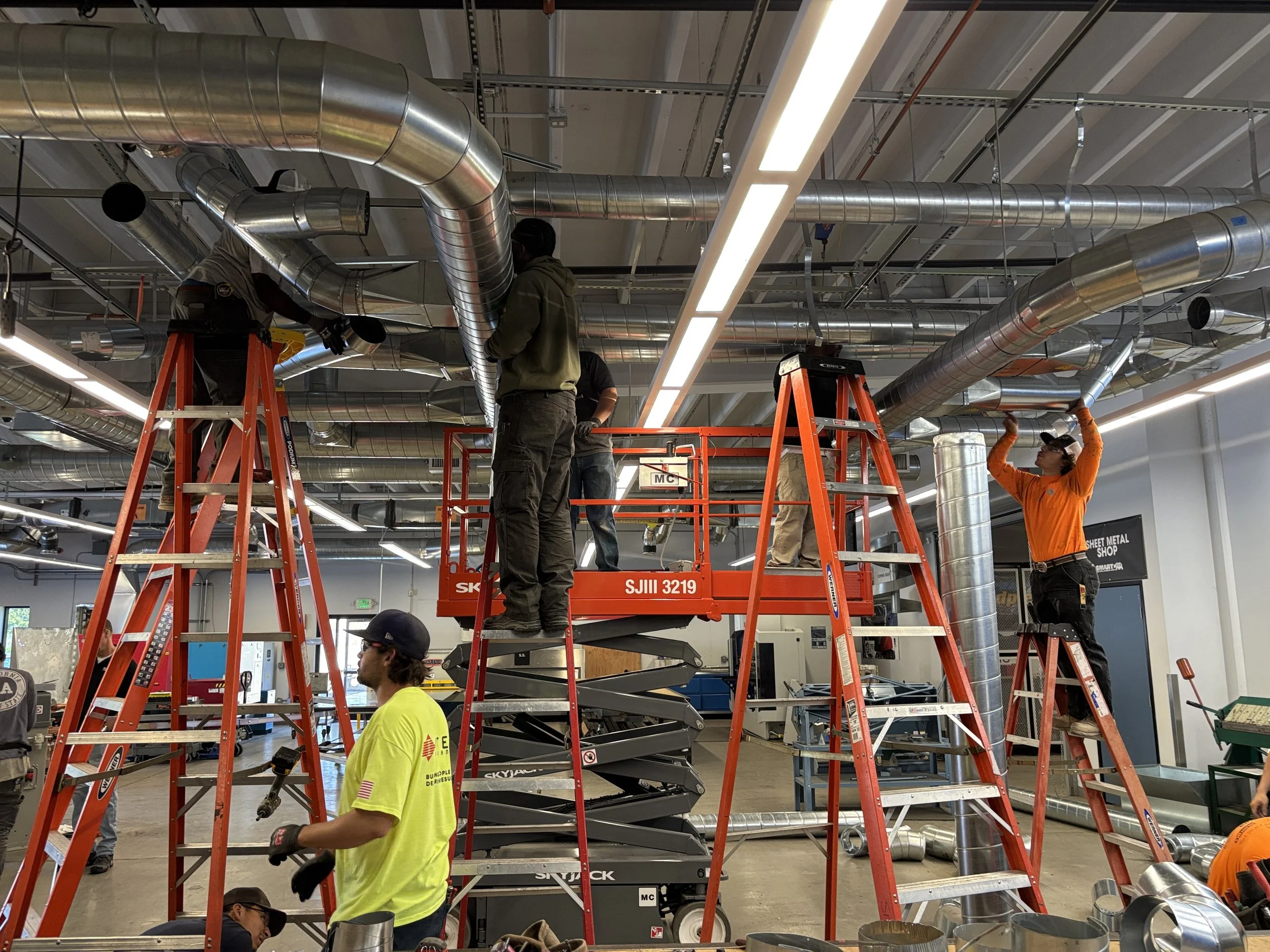
From Drawings to Installation: Third-Year Sheet Metal Apprentices Build Complete Overhead Duct Systems
Our third-year sheet metal apprentices are connecting technical drawings, precision fabrication, and field installation through a comprehensive overhead ductwork project. The assignment takes students through the full construction process—from prefabrication drawings and fitting fabrication to installation, as-built documentation, and a total job cost breakdown.
The work begins with prefabrication drawings, where students translate project requirements into the information needed to build and assemble their duct systems. This stage reinforces dimensional accuracy, fitting layout, and planning before fabrication begins.
Apprentices then fabricate the required fittings and install their overhead systems as though the ductwork will remain exposed. That approach places added emphasis on alignment, fit, consistent workmanship, and the finished appearance of the installation. Each connection contributes to both the function of the system and the quality of the completed project.
Once installation is complete, students prepare as-built drawings to document the final configuration. They also develop a total cost breakdown to evaluate what it takes to complete the job, connecting shop and field decisions to the financial side of construction.
By bringing drafting, fabrication, installation, documentation, and cost analysis into one assignment, this project helps apprentices understand how each phase affects the next. It builds the technical judgment, planning skills, and accountability needed to move a sheet metal project from a drawing to a finished installation.
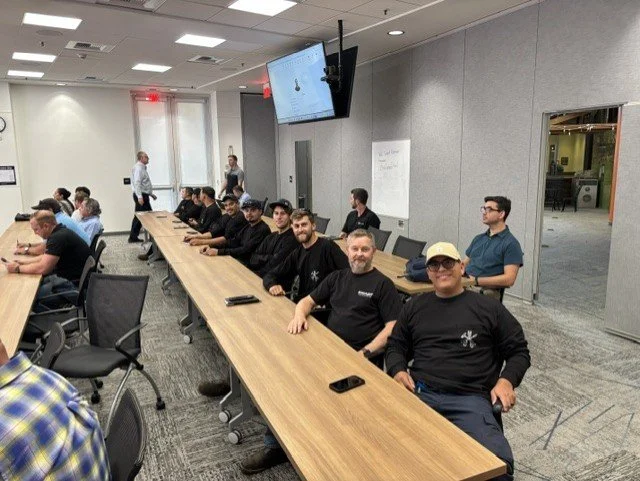
Third-year HVAC Service apprentices explore carbon, health, and equality through ASHRAE training, connecting service skills with better building performance.
Our third-year Service apprentices participated in an ASHRAE training meeting focused on carbon, health, and equality—expanding their understanding of how HVAC systems affect both the environment and the communities they serve.
These topics connect technical service skills with broader industry priorities: reducing carbon emissions, supporting healthy indoor environments, and ensuring access to comfortable building spaces. Understanding these connections helps apprentices see how their work can contribute to better building performance and occupant well-being.
By connecting classroom instruction with industry learning opportunities, our program prepares apprentices to think beyond the equipment. They are developing the technical knowledge and broader perspective needed to service increasingly complex systems and meet the demands of a changing HVAC industry.

TABB Certification Renewal: Important New Training Requirements for Technicians and Supervisors
TABB TAB Technician and Supervisor Recertification Update: This renewal cycle includes additional TABB-specific refresher training requirements. The courses focus on the updated TABB certification program and the SMACNA manuals that form the technical basis of the certification. Members should review the requirements early, complete the appropriate renewal course, and allow enough time before their certification expires. The required SMACNA publications are available through TotalTrack; contact your JATC coordinator or instructor for access.

From Bid Drawings to Installation: Third-Year Sheet Metal Apprentices Build Real-World Skills
Our third-year Sheet Metal apprentices are taking on an overhead group project that simulates the full scope of a field installation. Starting with a bid drawing, students remove existing fittings, fabricate replacements, and install their completed work—connecting drawing interpretation and shop fabrication with hands-on installation.
The project also includes preparing as-built drawings and a cost breakdown, helping apprentices understand how to document completed work and account for project costs. Each group must coordinate with other teams to plan the installation, strengthening the communication, teamwork, and problem-solving skills needed on a busy jobsite.
By bringing these responsibilities together in one project, our program prepares apprentices to approach sheet metal work with precision, productivity, and an understanding of how their work fits into the overall job.

Turning Airflow Measurements into Heating Performance Insights
Our second-year Service apprentices are putting air balance practices to work as a tool for calculating heating BTU output and evaluating system efficiency. By connecting airflow measurements with heating performance, students are learning to use data to understand how effectively a system delivers heat.
This hands-on training builds the technical skills needed for HVAC diagnostics, troubleshooting, and performance verification. Our apprentices are moving beyond basic equipment operation—developing the measurement and analytical skills that help service professionals make informed decisions in the field.

Beam by Beam: Second-Year Apprentices Practice SMAW Welding
Our second-year Sheet Metal apprentices are turning flat bar into fabricated I-beam sections using Shielded Metal Arc Welding (SMAW), commonly known as stick welding.
This hands-on project connects welding technique with the precision needed to fit and assemble steel components. As students build their sections, they develop electrode control, weld placement, and an understanding of how individual pieces come together into a finished fabrication.
By combining classroom instruction with practical shop projects, our apprenticeship program helps students build the technical skills, confidence, and craftsmanship they can carry onto the jobsite.

2nd-Year Sheet Metal Apprentices Train in First Aid, CPR and AED
Our 2nd-year Sheet Metal apprentices are working toward certification in First Aid, CPR and AED use. This training gives them the opportunity to practice responding to medical emergencies and build skills that matter on the jobsite and beyond.
Technical skills are only part of a strong apprenticeship. By including emergency response training in the program, we help apprentices prepare to look out for their coworkers and respond when every moment counts.

5th-Year Sheet Metal Apprentices Advance Their Revit Detailing Skills
Our 5th-year Sheet Metal apprentices are putting their building models to work in Module 4 of Intro to Revit 2025. After modeling three buildings in their last class, they are now learning to annotate those models with dimensions and tags.
The class is also exploring the difference between instance and type parameters, when to use temporary and permanent dimensions, and how detail lines support clear drawings. Each lesson builds the precision and communication skills apprentices need to turn a model into useful construction documentation.
A special thank-you to Julie Fifield and Bryan Lyon for creating the outstanding detailing coursework that supports this training!

First-year Sheet Metal apprentices develop drafting, fitting-layout, and fabrication skills by transforming their technical drawings into finished fittings.
Our first-year Sheet Metal apprentices began their training by learning the complete fabrication process—from fitting layout and drafting to building the fittings they designed.
During their first week of class, students created detailed fitting drawings and then transformed those plans into accurately fabricated sheet metal components. This hands-on project helped them understand how measurements, layout techniques, and technical drawings work together in real-world fabrication.
By connecting classroom instruction with practical shop experience from the very beginning, our advanced apprenticeship program develops accuracy, craftsmanship, problem-solving skills, and jobsite readiness. These apprentices are already building the strong technical foundation needed to become productive and highly skilled sheet metal professionals.

First-Year Apprentices Build a Strong Foundation with OSHA 30 Training
Our first-year Sheet Metal, Service, and Testing, Adjusting and Balancing (TAB) apprentices are completing OSHA 30 training—an important step in developing safe, skilled, and productive industry professionals.
Throughout the training, apprentices learn how to recognize workplace hazards, follow essential safety practices, and help maintain safe and efficient jobsites. Introducing these principles during the first year reinforces our program’s commitment to safety, responsibility, and professional excellence.
By combining comprehensive safety education with hands-on technical training, our apprenticeship program prepares students to enter the workforce with the knowledge, confidence, and jobsite awareness needed to succeed in today’s construction industry.

Fifth-Year Sheet Metal Apprentices Advance Their Revit and BIM Skills
Our fifth-year Sheet Metal apprentices are entering their second week of Revit training and making excellent progress. Students are learning to confidently navigate both 2D and 3D environments while developing essential Building Information Modeling (BIM) skills.
The class is also gaining hands-on experience creating walls and adding windows and doors to detailed digital building models. This advanced training prepares our apprentices to use modern design technology, read and develop coordinated construction plans, and contribute more effectively on today’s technology-driven job sites.
By combining skilled-trades education with industry-leading software, our program continues to prepare productive, highly qualified sheet metal professionals for the future of construction.

Sheet Metal Training Strengthens TAB Expertise
Our fourth- and fifth-year Testing, Adjusting, and Balancing (TAB) apprentices recently participated in hands-on sheet metal training designed to expand their technical knowledge and field capabilities.
By developing practical sheet metal skills, apprentices gain a better understanding of HVAC duct systems, airflow, fabrication, and installation. This cross-training strengthens their ability to evaluate system performance, identify potential problems, and understand how ductwork affects airflow and overall building efficiency.
Combining advanced TAB instruction with real-world sheet metal experience helps produce knowledgeable, versatile professionals who are prepared for today’s demanding HVAC industry. This training reflects our commitment to advanced education, hands-on learning, and building a highly skilled workforce.

Fourth-Year Sheet Metal Apprentices Corner Board Fabrication Project
Our fourth-year Sheet Metal apprentices recently completed hands-on corner board training focused on accurately measuring, laying out, and fabricating sheet metal fittings.
Students applied advanced layout techniques, precise measurements, and proven fabrication methods to transform flat sheet metal into correctly formed fittings. This practical exercise strengthened their skills in field measurement, material planning, fitting layout, development, and quality control.
Training like this prepares our apprentices to work efficiently and accurately in real-world HVAC and sheet metal environments. By combining classroom instruction with hands-on fabrication, our program develops productive, highly skilled craftspeople who are ready to meet the demands of today’s industry.

Fourth-Year Sheet Metal Apprentices Advance Their GMAW Welding Skills
Our fourth-year Sheet Metal apprentices recently applied their Gas Metal Arc Welding (GMAW) skills while fabricating and welding grease duct.
This specialized, hands-on training challenged students to produce strong, continuous welds while maintaining accuracy, cleanliness, and attention to safety. Apprentices gained practical experience in material preparation, welding-machine setup, joint fit-up, heat control, and weld-quality inspection.
Grease duct fabrication requires precision and dependable workmanship. By completing projects based on real-world industry applications, our apprentices are developing the advanced welding and fabrication skills needed for careers in commercial construction, HVAC, and the sheet metal industry.
Training like this demonstrates our program’s commitment to producing safe, skilled, and job-ready professionals.

3rd Year TAB Students Build and Commission VFD and Lighting Control Systems
Our 3rd-year TAB students recently completed the build and commissioning of VFD and lighting control panels, demonstrating the advanced technical skills developed through our program. This project gave students direct experience with electrical assembly, control wiring, system integration, startup procedures, troubleshooting, and commissioning — all critical skills used in today’s mechanical, HVAC, and building automation industries.
By working on real-world control systems, students moved beyond classroom theory and gained practical knowledge in how variable frequency drives (VFDs) and lighting control systems improve energy efficiency, equipment performance, and building operations. From panel layout and component installation to testing and final startup, students were involved in every phase of the process.
Projects like this highlight the value of our program: preparing students with job-ready skills, hands-on experience, and exposure to the technologies used in modern commercial and industrial facilities. Our TAB program continues to build confident, capable technicians who are ready to contribute in the field from day one.

Third-Year Apprentices Master Gutter Miter Fabrication
Our third-year Sheet Metal Apprentices recently strengthened their field-fabrication skills through hands-on gutter miter training.
This advanced exercise challenged apprentices to accurately measure, lay out, cut, fit, and assemble gutter miters that meet professional standards. Students applied geometry, field measurements, and sheet metal layout techniques to create clean, precise connections while maintaining proper alignment and water flow.
The training also reinforced safe tool use, efficient material planning, quality control, and weather-resistant assembly methods. Each apprentice learned how careful preparation and accurate fabrication can reduce material waste, improve installation efficiency, and produce a durable finished product.
By combining classroom instruction with realistic field applications, our apprenticeship program develops skilled craftspeople who can confidently solve problems and deliver high-quality work on the jobsite. These projects build the precision, productivity, and craftsmanship demanded by today’s sheet metal industry.

Advanced VFD and Electrical Controls Training for Third-Year Service Apprentices
Our third-year Sheet Metal Service Apprentices are strengthening their electrical and HVAC controls knowledge through advanced, hands-on Variable Frequency Drive (VFD) training.
During this exercise, apprentices wired a momentary push-button switch into a holding circuit used to start and maintain operation of a VFD. They then configured the control sequence so that once the drive reached its commanded speed, an output signal energized a 120-volt indicator light. This provided a clear visual confirmation that the system had achieved the intended operating condition.
The project challenged apprentices to apply electrical theory while developing practical skills in control-circuit wiring, VFD operation, relay logic, sequence of operation, electrical schematics, and system troubleshooting. Students also practiced safe testing procedures and verified each stage of the circuit before placing the system into operation.
By combining modern HVAC technology with realistic troubleshooting scenarios, our apprenticeship program prepares students to confidently install, service, and diagnose today’s increasingly sophisticated building systems. This productive training develops the technical ability, problem-solving skills, and attention to detail required of highly qualified service professionals.

Building Certified Skills: Third-Year Service Apprentices Advance Their Brazing Expertise
Our third-year Service Apprentices recently updated their brazing certifications, demonstrating their commitment to safety, precision, and professional excellence.
During this advanced, hands-on training, apprentices strengthened the essential brazing skills used in HVAC and refrigeration systems. The certification process reinforced proper joint preparation, torch control, filler-metal application, heat management, leak prevention, and safe equipment handling. Apprentices were required to produce clean, reliable connections that meet demanding industry standards.
Maintaining current brazing certifications helps ensure our apprentices are prepared to work safely and productively in the field. By combining technical instruction, performance-based evaluation, and real-world service applications, our apprenticeship program continues to develop highly trained professionals who are ready to meet the evolving needs of the HVAC and sheet metal industries.
This is more than certification—it is proof of the skill, discipline, and craftsmanship our apprentices bring to every jobsite.

Precision in Practice: Third-Year Apprentices Master Press Brake Operations
Our third-year Sheet Metal Apprentices are advancing their fabrication skills through hands-on training with the press brake—an essential piece of equipment used to form precise bends in sheet metal.
Under instructor supervision, apprentices practice safe machine setup, proper tooling selection, blueprint interpretation, accurate measurement, and bend sequencing. Every exercise reinforces critical safety procedures, including personal protective equipment, machine guarding, pinch-point awareness, and proper material handling.
This advanced training combines classroom knowledge with real-world fabrication techniques, helping apprentices produce accurate, high-quality components efficiently. By learning to work safely and productively with industry-standard equipment, our apprentices are developing the technical skills, confidence, and craftsmanship required to succeed in today’s sheet metal industry.
Safety, precision, and productivity aren’t just lessons—they’re the foundation of a highly skilled workforce.