
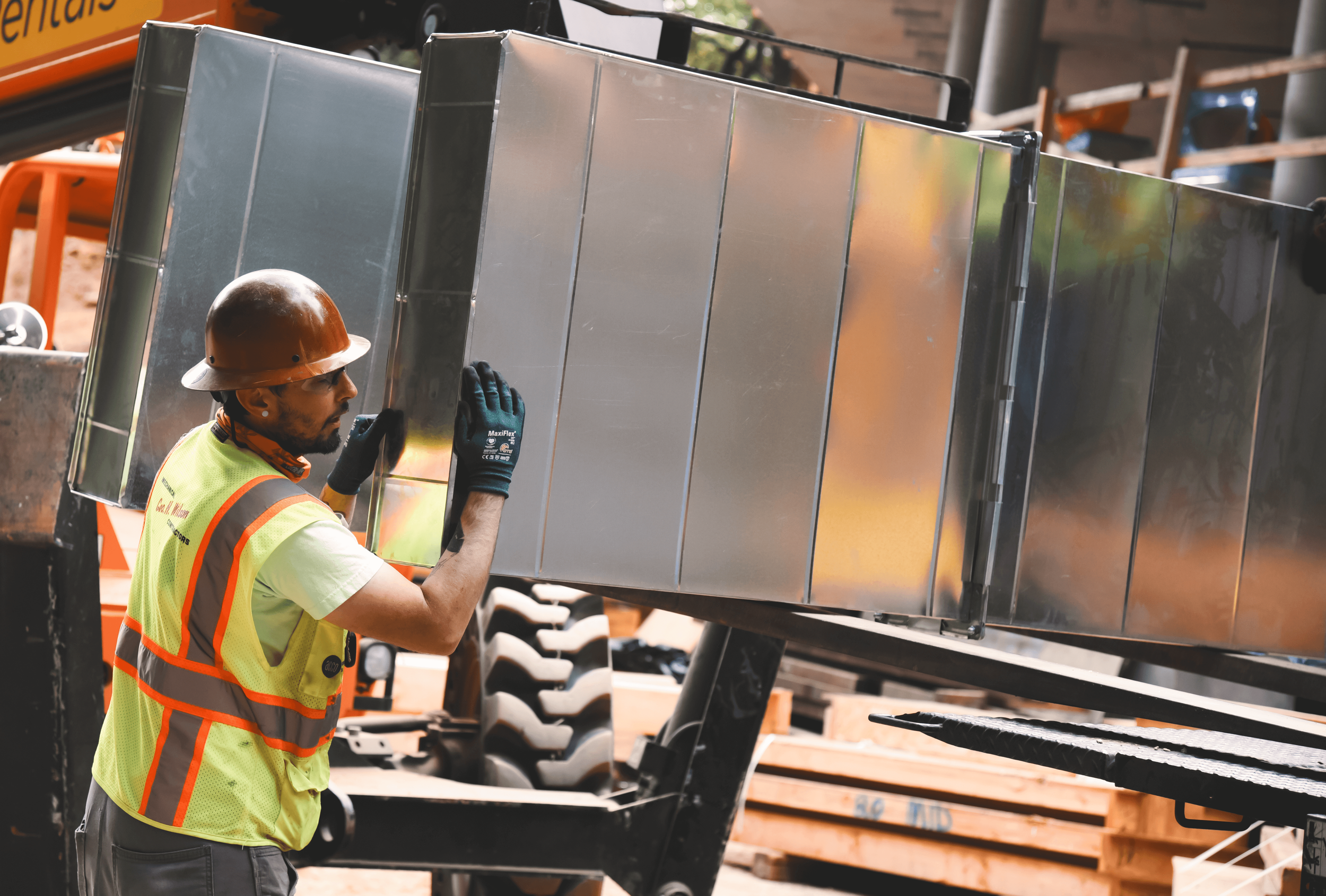
Why Join The Sheet Metal Trade?
Build a fulfilling and lucrative career In the sheet metal industry
Sheet Metal Work is one of the most in-demand career fields in 2025. Get paid while you learn, guaranteed per hour wage after graduation, and become part of a skilled and trained workforce that builds the infrastructure our communities depend on. Scroll to learn more about the program, and you’re future potential.
Start a rewarding career in Sheet Metal Work, one of the most in-demand career fields in 2025. Get paid while you learn, guaranteed salary when you graduate, and become part of a skilled workforce that builds the infrastructure our communities depend on.
the difference between traditional college and joining the trades
SMw 104 Graduates
Starting Journeyperson Wage
$110K
Program Length: 5 year
$$$ Get paid while you learn
$$$ Tuition paid by your employer
$$$ Pay Increases with completion of training periods
$$$ ZERO student debt
$$$ Recession-resistant career
$$$ Comprehensive health and dental coverage for your entire family.
$$$ 401(k) and Pension plan for a secure retirement.
✔ Hands-on, practical training
✔ College credits included
✔ Clear advancement path
*Based on 2000 working hours per year
traditional
college Graduates
Starting Salary
$60K
Program Length: 4+ years
$$$ High tuition and fees
$$$ Average $25K - $39K Student loan debt
$$$ No post-graduate job guarantees
❌ Limited workplace protections
❌ Mostly theoretical learning
❌ 4+ years before earning
❌ Competitive job market
❌ Uncertain career prospects

A Career in sheet metal paves the way To a STABLE future WITH well deserved WAGE INCREASES
That means more opportunities, higher earning potential, and long-term security and protection
Experience well deserved pay increases
Watch how your skills and earning potential grow throughout our apprenticeship program
Pre-apprentice to full program typically takes 6-18 months depending on your performance and class availability. Training follows a semester system with wait lists for high demand.
Starting Apprentice Wage
$55,000/Yr.
*Based on 2000 working hours per yearddd
building your foundation
Sheet metal Apprentice
To become an apprentice, you must pass an aptitude test, seek employment, and be hired by a signatory contractor. Once sponsored, you’ll be enrolled in the program.
Before sponsorship, you can work as a pre-apprentice to gain experience, confirm the trade is right for you, and demonstrate your work ethic and interest.
After starting the apprenticeship, you’ll be on track to complete the program in five years, with scheduled pay increases along the way.
Apprentice Wage
Advancement
5-Year Apprenticeship
Your training combines classroom instruction, hands-on lab work, and real-world, on-the-job experience. Over the course of the 5-year (10 semester) apprenticeship, you’ll receive scheduled wage increases while building your retirement and enjoying full family health coverage.
Gross Taxable Wages by Semester (Based on 2000 Hours per Year):
Semesters 1–3: $55,000/year
Semester 4: $60,000/year
Semester 5: $66,000/year
Semester 6: $71,000/year
Semester 7: $77,000/year
Semester 8: $82,000/year
Semester 9: $88,000/year
Semester 10: $93,000/year
Upon Graduation
$110,000 /Year
*Based on 2000 Hours Per Year
Journeyperson Status
Upon completing all 10 semesters, passing required coursework, and fulfilling on-the-job training (OJT) hours, you will earn journeyperson status. This certification is recognized throughout the United States and Canada, signifying that you are a fully trained and skilled professional in your trade.
As a journeyperson, the union and signatory contractors work together to ensure your wages continue to grow alongside your experience, skills, and knowledge.
What does a career in sheet metal look like?
-
![Construction worker doing commercial HVAC work]()
Commercial HVAC
Work on large-scale mechanical systems that move heated and cooled air throughout commercial buildings.
-
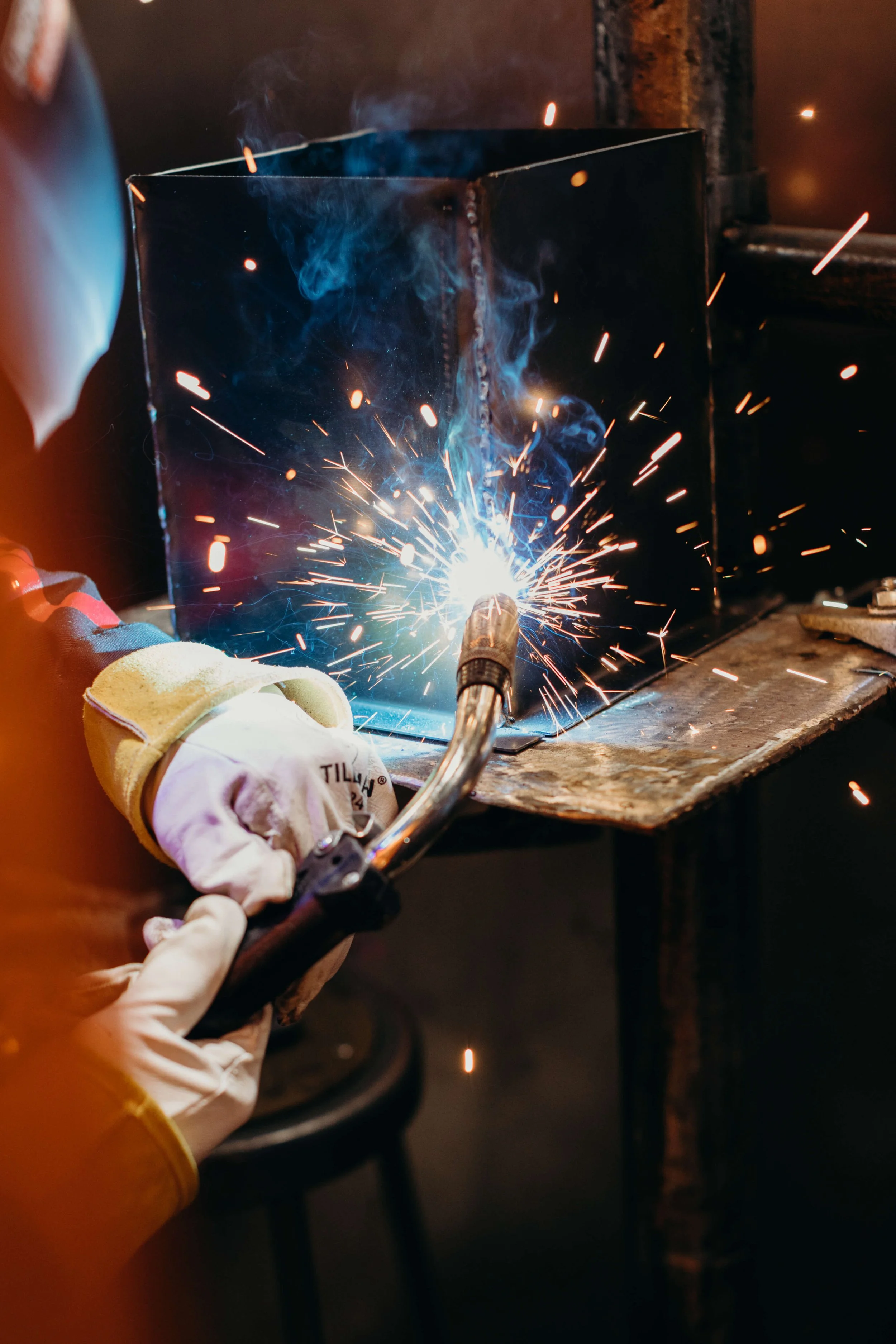
![Person welding metal with sparks flying]()
Welding
Welding is a key method for permanently joining metal using heat to create strong, lasting bonds. Welders work on everything from large industrial projects to custom fabrications across industries like construction, manufacturing, and energy. With a wide range of techniques and processes, welding is a versatile and in-demand skill.
-
![A person's hands turning a blue valve labeled 'FIRE DAMPER']()
Residential HVAC
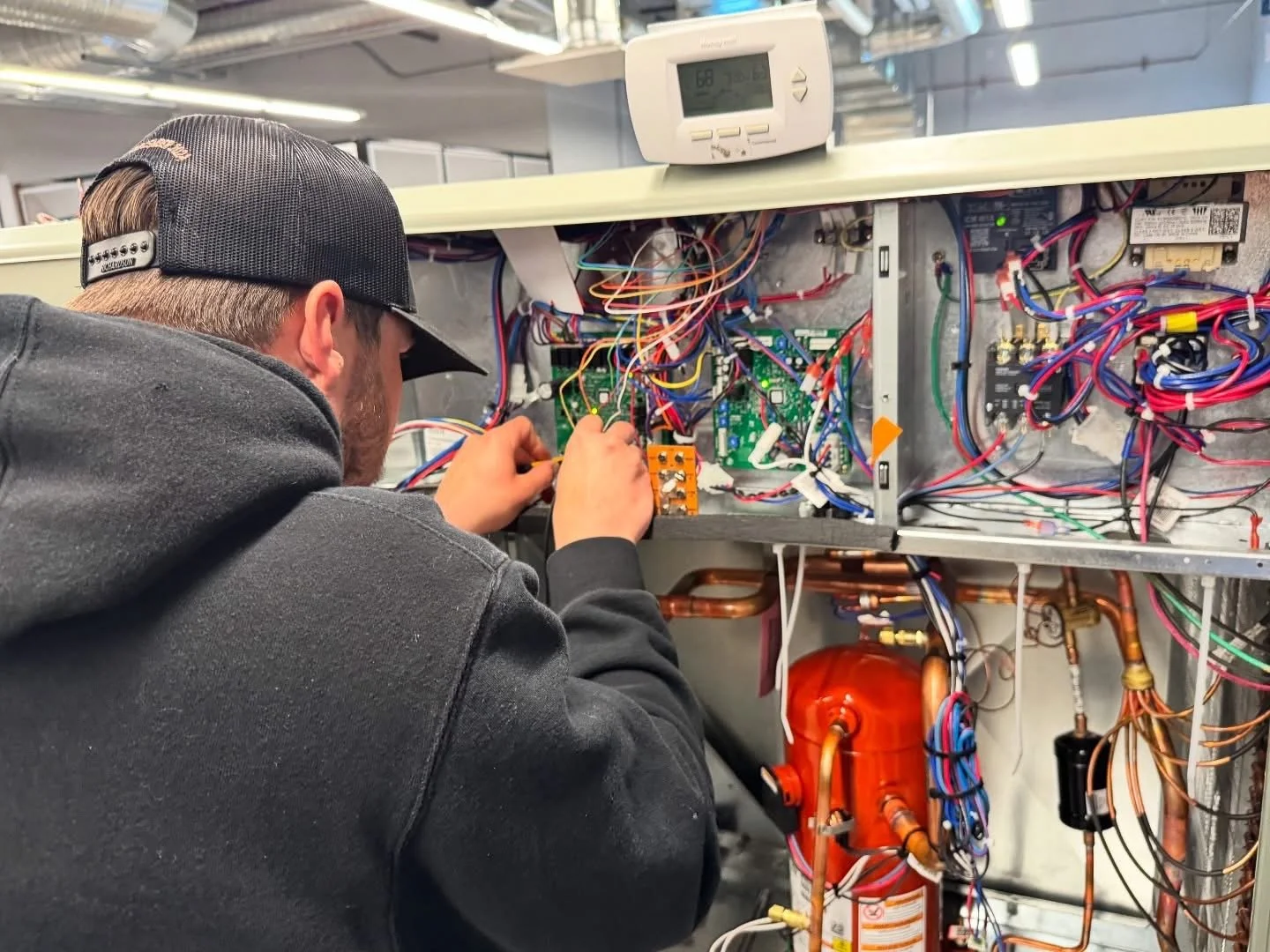
Residential HVAC technicians install, service, and maintain heating and cooling systems in homes, including new construction and existing buildings. Most work is hands-on in the field, handling ductwork, system upgrades, and troubleshooting.
-
![A man with a beard standing next to a tool board with various wires and tools.]()
Testing, Adjusting, Balancing (TAB)
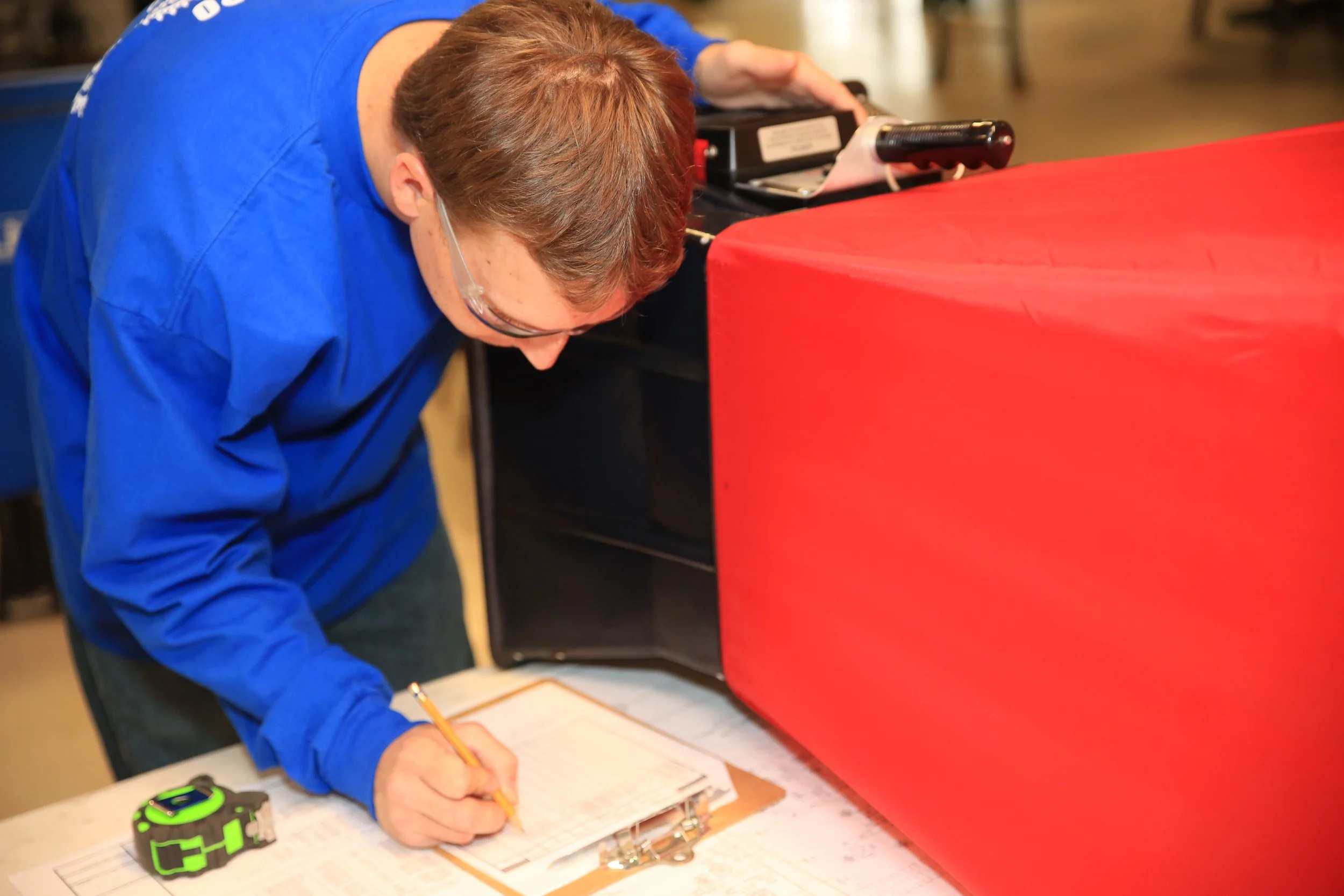
Testing, Adjusting, and Balancing (TAB) ensures HVAC systems deliver air and water efficiently, quietly, and safely. TAB technicians use math and problem-solving skills to test, verify, and optimize system performance.
-
![Two workers in red uniforms working with industrial machinery in a factory]()
Architectural Sheet Metal
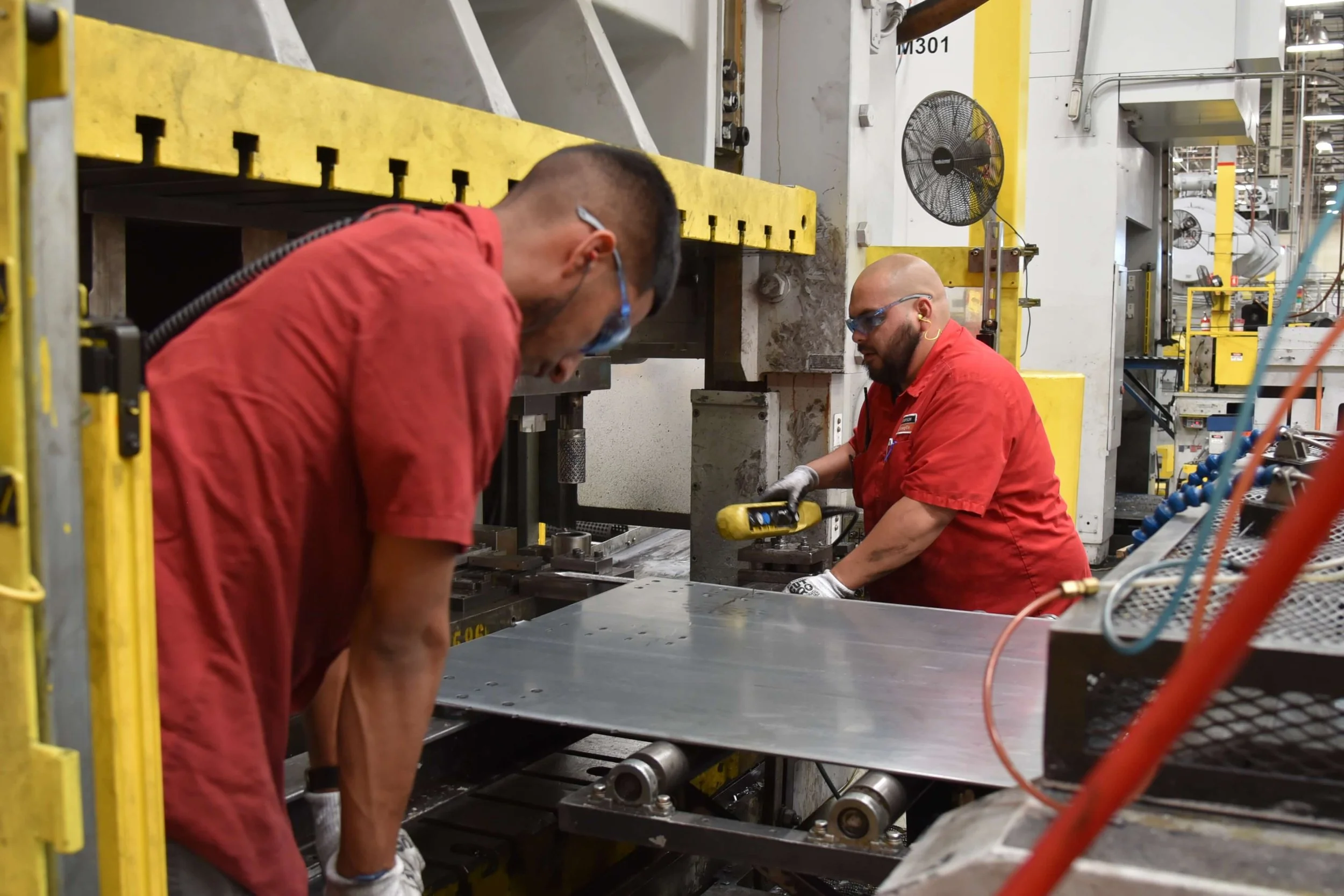
In architectural sheet metal, you’ll shape metal into functional and visually striking elements for modern buildings. Gain a foundation in architectural principles while working in a shop or on construction sites alongside other skilled trade professionals.
Get More Information -
![Detailer]()
Detailer
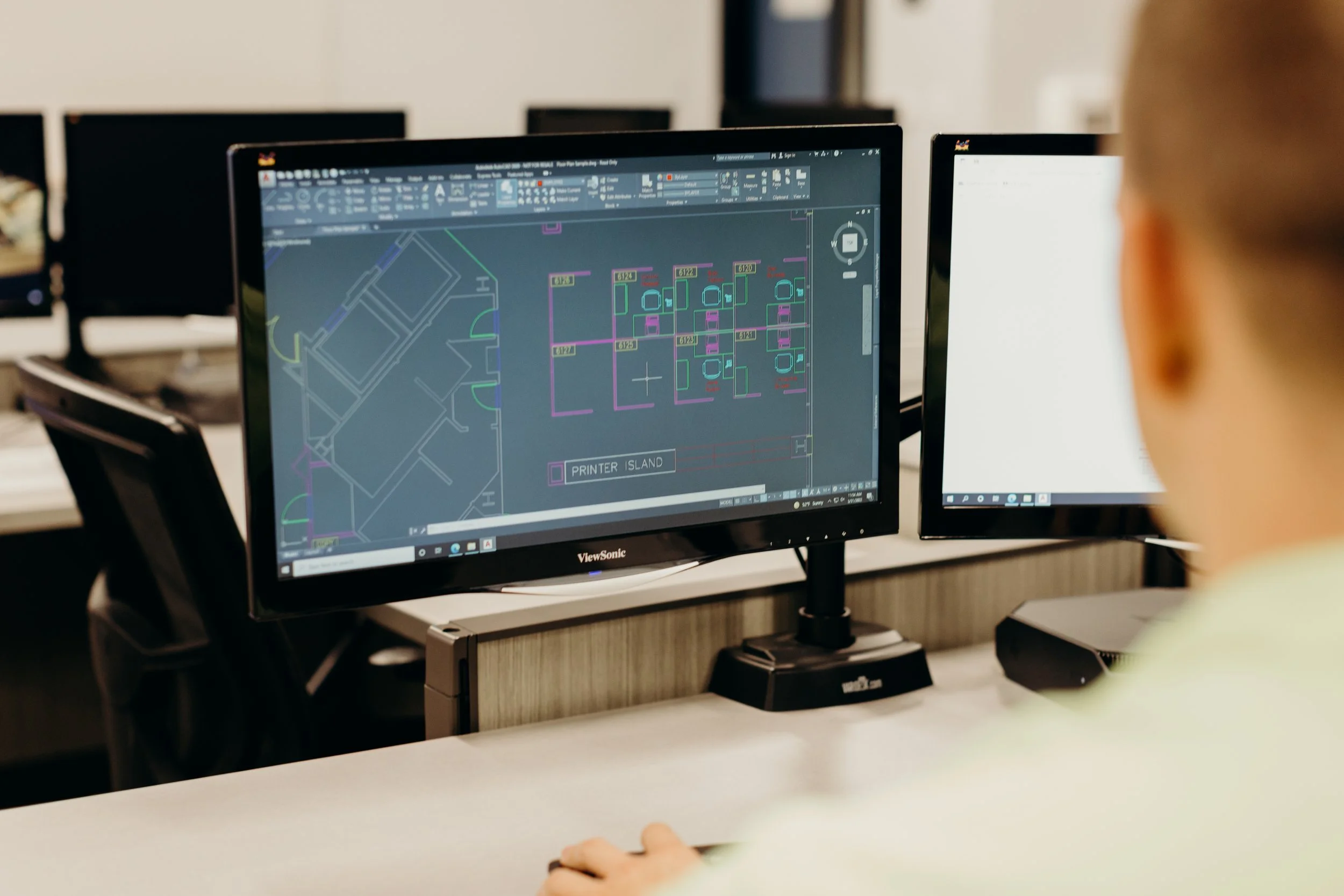
Certified detailers coordinate between trades on commercial HVAC projects, creating precise 3D models from plans and field measurements using BIM tools like Revit. While primarily office-based, they also visit job sites to collaborate with project teams and ensure accuracy and efficiency.
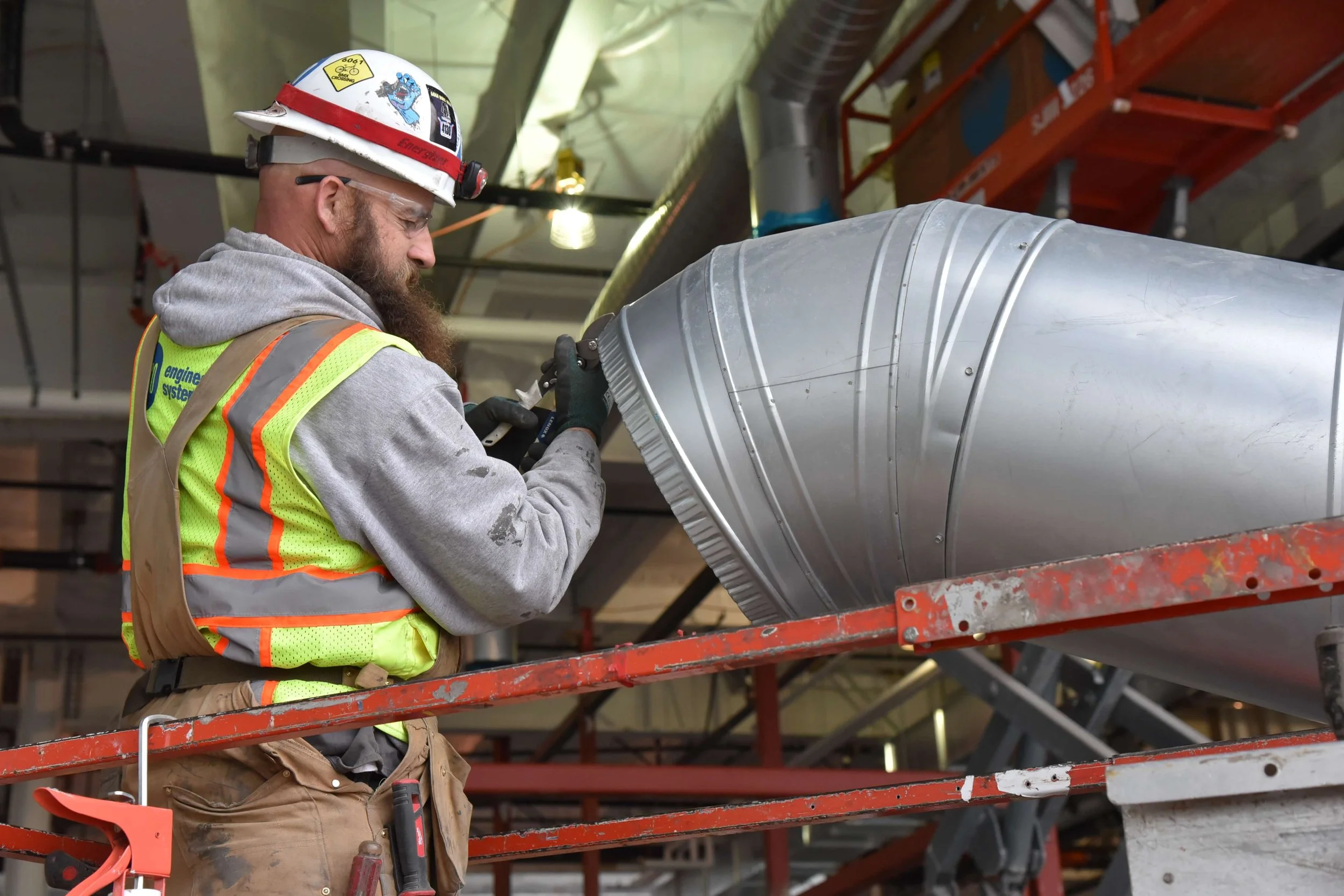
The SMTC Apprenticeship program combines
classroom instruction with hands-on training in real-world environments.
All SMTC graduates have the opportunity to return to the training center at any time for upgrade courses and to earn additional certifications… at no cost.
Academic Education
While hands-on skills are essential, classroom instruction provides the technical knowledge needed to fully understand the trade. This strong foundation allows you to excel in hands-on training, with a clear understanding of how systems work from start to finish.
Mathematics and Geometry
Physics and Materials Science
HVAC Systems Design (Mechanical Duct Modeling in Revit)
Building Codes and Standards
Business and Project Management
Electrical Theory
Air and Water Measurement
Indoor Air Quality (IAQ)
Energy Efficiency in the Built Environment
Hands-On Lab
As you build your knowledge through classroom instruction, you’ll immediately apply what you’ve learned in a lab setting. This hands-on experience allows you to test concepts, develop practical skills, and reinforce your understanding in real-world scenarios.
Blueprint Reading and Layout
Cutting, Forming, and Joining Techniques
Welding and Soldering
HVAC System Installation and Service
Safety Protocols and Regulations
Physical Measurements and Adjustments
FLS a of Dampers and Smoke Control Systems
Field Experience
Unlike a traditional college path, an apprenticeship lets you immediately apply your skills and knowledge in the field between classes. Working on real job sites reinforces what you’ve learned, improves retention, and helps you identify areas to focus on in your next training session.
You’ll be paid to apply your training in the field, gaining experience in ductwork fabrication and installation, architectural metal work, testing, adjusting, and balancing (TAB), system start-up and service, and inspections.
Union Membership
Prepare for long-term success with professional skills and union membership benefits.
A union is a group of skilled workers who come together to ensure fair treatment while delivering the highest quality work to signatory contractors. In return for that commitment, union members earn:
401(k) and pension plans for a secure, dignified retirement
Full health and dental coverage for the entire family
Ongoing training and continuing education
Safe and respectful working conditions
A clear path to a stable, middle-class lifestyle
-
![Large blue quotation marks on a black background.]()
The 5-year HVAC Service apprenticeship program was one of the best decisions I’ve ever made.
What stood out most to me was the quality of the instruction. The staff were incredibly knowledgeable and always willing to take the time to explain complex systems in a way that made sense. They really cared about our success and pushed us to be our best—both in the classroom and on the job. Thanks to this program, I now have a strong foundation, industry certifications, and a career I’m proud of. I’d recommend this path to anyone who wants to work hard, learn a skilled trade, and build a future they can be proud of.”
-
![Blue quotation mark symbols on a white background]()
This was the best decision my family and I ever made—it has provided us with a stable, comfortable, middle-class life.
I [was an] elementary school teacher, but eventually sought a career change. The Joint Apprenticeship Training Center gave me the hands-on training and industry certifications I needed to rise to the top of my field. Simply put, this was the best decision my family and I ever made—it has provided us with a stable, comfortable, middle-class life.”
-
![Blue quotation marks icon on a black background.]()
The Sheet Metal trade opened up endless opportunities."
I knew I wanted a career where I could work with my hands while continuing to grow academically. Joining the Sheet Metal trade opened up endless opportunities. Through the apprenticeship, I’ve gained deep knowledge of HVAC systems—learning everything from installation to ongoing maintenance, while building a rewarding and well-paying career.”
-
![Blue stylized quotation mark icon.]()
This apprenticeship didn’t just teach me a trade—it gave me a career and a future.
Over the five years, I learned how to read blueprints, operate fabrication equipment, and create precise ductwork and metal components that meet real jobsite demands. We didn’t just learn how to work with metal—we learned how to think like fabricators. From layout to installation, every step was hands-on and backed by knowledgeable instructors who truly wanted to see us succeed. Their experience in the field made a big difference, and they were always ready to answer questions or share insight from real projects. I’m proud to be part of a trade that builds essential systems with skill, accuracy, and pride.”
-
![Large blue quotation marks on a black background.]()
Joining the Sheet Metal Union gave me a real pathway forward, one that led to a high-demand skill set and steady, meaningful employment in a trade I genuinely enjoy.
After high school, I faced some challenges and found myself stuck in a series of dead-end service jobs. Joining the Sheet Metal Union gave me a real pathway forward, one that led to a high-demand skill set and steady, meaningful employment in a trade I genuinely enjoy. Today, I take flat sheet metal and turn it into custom, functional ductwork systems every day. It’s work I’m proud of, and it’s provided me with both stability and purpose.”
-
![Blue quotation marks symbol on a black background.]()
Most non-union HVAC jobs only offer healthcare for the technician, but through Local 104, my entire family is covered
As a single parent, I needed a career that would allow me to truly support my family. Most non-union HVAC jobs only offer healthcare for the technician, but through Local 104, my entire family is covered. In addition to full healthcare, I receive a living wage and a pension, giving me the peace of mind that I’ll be able to retire with dignity. Today, I work as a certified welder in a job I love, and the opportunities ahead feel limitless.”

Unlike traditional education, you’ll graduate without student debt while gaining in-demand skills and knowledge. Skilled, trained technicians will be needed for decades; regardless of AI or industry changes. A trade is a career that lasts a lifetime.